
Views: 0 Author: Site Editor Publish Time: 2026-08-24 Origin: Site


Eyes naturally serve as the focal point of your face, and subtle aesthetic changes can completely transform your daily appearance. Integrating aesthetic eyewear into your routine opens up exciting possibilities for personal expression. However, achieving a seamless look requires balancing visual appeal against ocular health and long-term physical comfort. For everyday wear, the transition between the printed graphic and your natural iris must look realistic under both harsh daylight and bright office lighting.
This comprehensive guide breaks down exactly how to evaluate different graphic patterns and pair them harmoniously with daily makeup styles. You will learn the technical dimensions of lens construction and how they interact with cosmetic color theory. We will also navigate material safety standards to ensure your eyes remain comfortable all day long. By understanding these key principles, you can confidently build an everyday look emphasizing both beauty and safety.
Evaluating lens patterns requires understanding three technical dimensions: limbal ring design, pixelation (dot matrix), and opacity levels.
Natural colored contact lenses use multi-tone blending to mimic iris depth, which dictates the appropriate eyeshadow palettes and undertones for daily wear.
Selecting soft colored contact lenses involves prioritizing oxygen permeability (Dk/t) and water content to ensure all-day comfort without drying the eyes.
Implementation safety mandates inserting lenses before applying makeup to prevent cosmetic particulates from trapping beneath the lens surface.
Understanding the technical construction of Colored Contact Lenses is absolutely essential. This knowledge helps you achieve a realistic appearance complementing your daily makeup without looking artificial.
The limbal ring defines the outermost edge of the iris. Modifying this area dramatically changes how large or defined your eyes appear.
No Limbal Ring (Outer Ring): These designs blend seamlessly into the sclera. They work best if you want a soft, highly realistic color change. They avoid any harsh enlarging effects.
Soft/Diffused Ring: This style adds subtle definition alongside slight enlargement. We highly recommend diffused rings for corporate environments or minimalist makeup days.
Solid Ring: A thick, solid ring creates a very harsh border. You should generally avoid solid rings for natural everyday wear, as they look distinctly artificial up close.
Limbal Ring Comparison Chart
Limbal Ring Type | Visual Effect | Best Makeup Pairing | Everyday Suitability |
|---|---|---|---|
No Limbal Ring | Soft color change, high realism | Sheer tints, glosses, minimal mascara | Excellent |
Soft / Diffused Ring | Subtle enlargement, gentle definition | Neutral shadows, brown eyeliner | Highly Recommended |
Solid Ring | Dramatic enlargement, doll-like gaze | Heavy lashes, thick black eyeliner | Not Recommended |
High-quality cosmetic lenses utilize intricate micro-dot patterns rather than solid blocks of flat color. We call this pixelation. Micro-dots allow your natural eye color to peek through the design. This creates essential visual depth. Solid color blocks look unnatural because human irises naturally feature complex, textured muscle fibers. Dot matrix printing effectively mimics this biological texture.
Opacity determines how much natural eye color shows through the material.
High Opacity: You need high opacity to cover dark brown eyes effectively. However, high opacity requires meticulous makeup pairing to avoid a flat, lifeless appearance.
Gradient Pupillary Opening: A feathered inner ring prevents a harsh line around the pupil. Your pupils constantly constrict and dilate in different lighting conditions. A gradient transition ensures the pattern looks natural even under bright daylight.
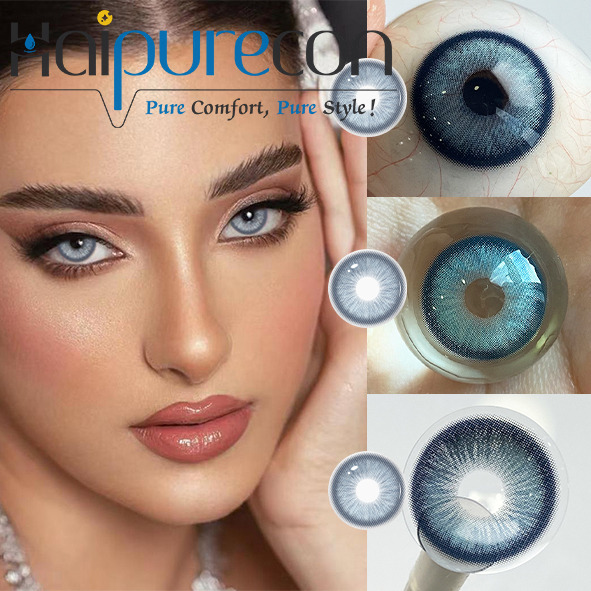
The interplay between graphic design, color intensity, and makeup tones dictates the overall cohesiveness of your daily look. Balancing these elements prevents your eyes from overwhelming your face.
Minimalist makeup relies on subtle enhancements rather than heavy pigments.
Lens Match: Choose 1-tone or 2-tone Natural Colored Contact Lenses. Opt for soft brown, hazel, or subtle olive tints. These shades blend effortlessly into most natural eye colors.
Makeup Synergy: Pair them with neutral matte eyeshadows. Use brown mascara instead of black for a softer gaze. Apply sheer coverage skin bases to keep the complexion fresh. The colored iris will act as the primary defining feature of your face.
Workplace environments usually require a polished but restrained aesthetic.
Lens Match: Select 3-tone lenses featuring a diffused limbal ring. This provides structural definition without looking overly dramatic. Cool-toned grays, muted blues, or warm amber tones work beautifully here.
Makeup Synergy: These patterns complement structured eyeliner perfectly. Add champagne or taupe shimmer highlights to the inner corners. Finish the look using soft peach or rose blush to balance the face.
Aligning your eyewear with your skin undertones creates visual harmony.
Warm Undertones: Hazel, honey, and warm green designs enhance golden or peachy skin tones. They bring out a natural, sun-kissed warmth.
Cool Undertones: Gray, icy blue, and amethyst tones beautifully complement pink or cool undertones. They create a striking, clean aesthetic.
Contrast Framing: You can highlight the iris pattern without applying heavy makeup. Try using a contrasting eyeliner. For example, applying a warm copper liner perfectly accentuates soft green patterns. This technique draws attention directly to the eye center.
For everyday use, aesthetic appeal must never supersede ocular health. Evaluating the manufacturing material remains a critical step in your decision-making process.
Not all lens materials perform the same way during long hours of wear.
Hydrogel: These materials feature a higher initial water content. They feel great upon insertion. However, they suit shorter wear times better. Hydrogel often leads to end-of-day dryness. The material draws moisture directly from your eye to maintain its physical shape as it dehydrates.
Silicone Hydrogel: This advanced material offers significantly higher oxygen transmissibility. We measure this breathability as Dk/t. Silicone hydrogel allows more oxygen to reach the cornea. Eye care professionals prefer this material for everyday, long-hour wearers. It actively prevents corneal hypoxia and reduces redness.
Safety depends heavily on how the manufacturer applies the color. You must ensure your chosen brand uses advanced manufacturing processes. Look for "pigment sandwich technology." This method encases the color pigments securely between two clear layers of lens material. Color pigments should never directly touch the sensitive cornea. Direct pigment contact can cause severe irritation, allergic reactions, and long-term damage.
Getting the physical fit right matters just as much as picking the right color. Proper sizing prevents the Soft Colored Contact Lenses from shifting uncomfortably.
Diameter Differences: The graphic diameter refers to the size of the printed pattern alone. It differs from the total lens diameter. For everyday natural wear, graphic diameters between 13.0mm and 13.5mm usually look best. Anything larger begins to look artificial.
Base Curve: The base curve measures the curvature of your eye. Proper matching requires a professional optometrist's measurement. An incorrect base curve causes the edges to lift, shift around constantly, or scratch the delicate eye surface.
Adopting cosmetic eyewear into a daily routine introduces specific hygiene requirements. You must follow these safety guidelines strictly to avoid infections.
You should only purchase products holding proper medical device certifications. Look for FDA approval in the United States or CE marks in Europe. These certifications guarantee the materials meet strict safety and manufacturing standards. Always avoid unregulated novelty vendors found in beauty supply stores or temporary pop-up shops. They often sell products lacking basic safety testing.
Cosmetic lenses fall under the classification of medical devices. This holds true even if you do not require vision correction (plano). A valid prescription verifying your eye health and physical fit remains standard practice for all reputable retailers. Skipping the fitting process dramatically increases your risk of corneal abrasions.
Combining cosmetic eyewear with makeup products requires careful sequencing.
Rule of Thumb: Lenses go in before applying any skincare or makeup. Lenses come out before starting your makeup removal routine.
Risk Mitigation: Wash your hands thoroughly before handling them. Avoid oil-based makeup removers near the eyes while wearing them. Oils quickly degrade silicone hydrogel materials. Skip fibrous lengthening mascaras, as tiny fibers can easily fall onto the eye. Never apply eyeliner directly to the inner waterline (tightlining). Tightlining transfers lipids, waxes, and cosmetic debris directly onto the lens surface, leading to micro-abrasions and bacterial infections.
When finalizing your decision, structure your purchase carefully. This approach minimizes health risks and maximizes your trial efficiency.
We strongly recommend beginning your journey with daily disposables.
Daily wear offers the highest possible hygiene standard. You throw them away every night, meaning zero maintenance and no risk of protein buildup.
They allow you to test different colors and patterns freely. You avoid committing financially to a 6-month or yearly replacement cycle.
Look for convenient 10-pack trial sizes. These small packs let you test color compatibility with your natural eye color and existing makeup wardrobe.
Always factor in your natural starting point. Dark brown eyes will naturally mute lighter, low-opacity patterns. If you have dark eyes, look for user reviews or brand charts specifically demonstrating the product on dark eyes. A color looking vibrant on blue eyes will look completely different on brown eyes.
First, consult an eye care professional to get your current BC and DIA measurements. Next, select two or three daily disposable options featuring soft limbal rings and micro-dot patterns. Finally, test them under natural daylight while wearing your typical everyday makeup. Evaluate how they feel after six hours of wear before buying larger bulk boxes.
Selecting cosmetic eyewear for everyday makeup is a careful balance of aesthetic compatibility and rigorous safety standards. By focusing on micro-dot patterns and seamless pupillary transitions, you can achieve a truly natural enhancement. Always prioritize breathable silicone hydrogel materials to maintain moisture and prevent redness throughout long workdays. Purchasing only FDA-approved brands protects your long-term ocular health. Furthermore, strictly adhering to proper makeup hygiene protocols ensures your daily wear remains visually appealing and physically comfortable. Take the time to secure a professional fitting, test daily disposables first, and build your makeup routine around your new eye color.
A: Yes, you can wear them daily provided they are high-quality, breathable soft lenses, preferably made of silicone hydrogel. They must be properly fitted by an eye care professional. You must also maintain a strict daily cleaning regimen or opt for daily disposables to prevent protein buildup and infections.
A: Look for options featuring a high-opacity micro-dot pattern. Multi-tone designs, typically 2-tone or 3-tone, add realistic depth. Ensure the design features a feathered, gradient transition toward the pupil. This specific blending technique prevents harsh lines and integrates smoothly with dark natural irises.
A: Always insert them before applying any makeup or skincare. Doing this prevents cosmetic particles, oils, or powders on your hands and brushes from becoming trapped beneath the material. Trapped debris quickly causes irritation, blurry vision, or potential corneal damage.
A: The total lens diameter measures the physical width of the entire contact, dictating how it fits your eye. The graphic diameter refers only to the specific area printed with color. For a natural everyday aesthetic, we recommend a graphic diameter between 12.8mm and 13.5mm.


