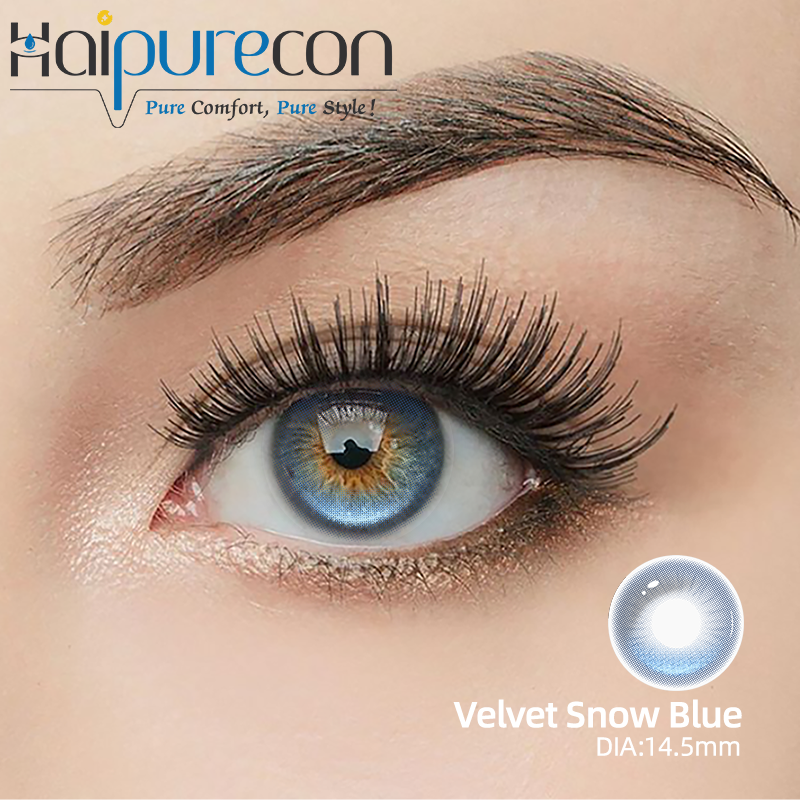
Pairing naturally cool-toned eye colors with warm skin undertones presents a specific color theory challenge, often resulting in an artificial or clashing appearance if the wrong lens is chosen. Buyers with warm skin—featuring golden, peach, or yellow undertones—frequently struggle to find blue lenses that look natural, particularly when attempting to mask naturally dark brown eyes without creating a flat, pixelated, or "bug-eye" effect. Selecting the right lens requires evaluating color blending technology, opacity levels, lens materials, and wear cycles. This guide provides a framework for evaluating and selecting blue lenses that complement warm undertones, optimize your overall aesthetic, and maintain ocular health.
Color Theory Alignment: Warm skin undertones pair best with blue lenses that feature hazel, gold, or green inner rings to create a seamless transition from the natural eye color.
Opacity is Critical: Effectively utilizing blue contacts for dark eyes requires high-opacity, multi-tone printing technology rather than translucent enhancement tints.
Material and Wear Cycle: Daily blue contact lenses offer the highest safety profile and moisture retention, though monthly silicone hydrogel options provide a more cost-effective solution for frequent wearers.
Holistic Styling: Achieving a cohesive look requires aligning the chosen lens profile with complementary warm-toned makeup and understanding how different lighting environments affect lens opacity.
Safety First: Aesthetic goals must not supersede ocular health; verifying base curve (BC), diameter (DIA), and FDA/CE compliance is mandatory before purchase.
The Color Theory: Matching Blue Contact Lenses to Warm Undertones
Identifying your exact skin undertone establishes the baseline for selecting any cosmetic lens. Warm undertones manifest as golden, peach, or olive hues beneath the skin's surface. You can verify this through a standard overtone analysis. If the veins on your wrist appear greenish rather than blue or purple, you have warm undertones. If gold jewelry integrates with your skin better than silver, your complexion leans warm. Understanding these baseline colors dictates how your skin interacts with cool-toned accessories.
The primary aesthetic challenge lies in contrast management. Pure, icy blue lenses clash violently with warm skin. This stark temperature difference creates an unnatural, high-contrast appearance. The human eye immediately registers this specific color combination as artificial. You must bridge the gap between the cool lens and the warm skin using advanced manufacturing techniques and specific color gradients.
Modern lens manufacturers utilize sophisticated multi-tone printing processes to solve this exact color theory problem. Instead of a single flat color, high-quality lenses feature two-tone or three-tone designs. A three-tone lens typically includes a dark outer ring, a primary blue mid-section, and a warm inner ring. This inner ring is tinted with honey, hazel, or gold flecks near the pupil hole. These warm flecks blend seamlessly with your natural brown eye color. They harmonize with the golden or peach tones in your skin, creating a realistic transition from the pupil to the sclera.
Lighting environments drastically alter how these pigments perform. Natural daylight provides full-spectrum illumination that highlights the intricate multi-tone patterns of a lens. Artificial indoor lighting often casts a yellow or orange hue, shifting the perceived color temperature of the lens. Warm-skinned buyers should prioritize lenses with dynamic, multi-layered pigmentation. These designs maintain their depth and realism across varying lighting conditions, preventing the lens from looking flat or washed out indoors.
Skin Undertone and Lens Fleck Pairing Guide
Skin Undertone
Surface Overtone
Recommended Inner Ring Fleck Color
Visual Effect
Warm
Golden / Yellow
Honey or Amber
Creates a seamless gradient from dark brown pupils to the blue mid-section.
Warm
Peach / Apricot
Light Hazel or Copper
Softens the transition, preventing the blue from looking too icy or stark.
Warm / Neutral
Olive / Greenish
Gold or Olive Green
Harmonizes with the green undertones in the skin, creating a striking teal effect.
Evaluating Opacity: Blue Contacts for Dark Eyes
Not all colored lenses are manufactured to cover dark irises. Understanding the mechanical difference between enhancement tints and opaque tints prevents purchasing errors. Enhancement tints consist of translucent layers designed solely to boost or slightly shift naturally light eyes. If you place a blue enhancement tint over a dark brown eye, the result is a muddy, indistinguishable color. Opaque tints use solid, pixelated patterns dense enough to completely block the natural dark brown melanin beneath them.
The realism of an opaque lens depends heavily on its pixelation and printing pattern. Manufacturers use a micro-dot matrix printing method to apply color to the hydrogel material. Finer, denser pixelation yields a highly realistic iris pattern that mimics the natural crypts and furrows of a human eye. Block-color printing uses larger, less intricate dots and looks robotic. When selecting Blue Contacts for Dark Eyes, inspect the lens closely for micro-dot precision and layered opacity.
Limbal ring dynamics dictate the final aesthetic footprint of the lens. The limbal ring is the dark border around the iris. Defined limbal rings create an enlarging effect. If the ring is too thick or stark black, it looks highly artificial on warm skin tones. Soft or absent limbal rings offer a subtle transition. Lenses without a harsh outer border blend more organically with the sclera, which is highly recommended for lighter blue shades.
Pupil hole sizing presents a functional and aesthetic trade-off. A tight pupil hole (around 4.5mm) provides better coverage for dark eyes, leaving very little brown exposed. It can obstruct peripheral vision in dim lighting when your natural pupil dilates beyond the printed area. A wide pupil hole (5.5mm or larger) ensures clear vision but exposes a larger ring of your natural brown eye underneath. Improper base curve fit causes lens shift. If the lens slides off-center during a blink, it breaks the illusion instantly by revealing the dark iris beneath.
Limbal Ring Dynamics and Visual Impact
Limbal Ring Style
Design Characteristics
Best Use Case for Warm Skin
Defined / Thick
Solid black or dark brown outer border.
Best for deep navy lenses where high contrast is desired. Can look artificial with light blue.
Soft / Blended
Gradient dark edge that fades into the blue base.
Ideal for hazel-infused blues. Provides natural definition without harsh lines.
None / Borderless
Color extends to the edge without a darkening ring.
Perfect for muted gray-blues. Offers the most realistic look for light colors on dark eyes.
Wear Cycle and Material Evaluation
Choosing the right wear cycle impacts your daily routine and long-term ocular health. Daily Blue Contact Lenses offer distinct clinical advantages. They require zero maintenance and carry the lowest risk of protein and lipid buildup. You wear them once and discard them. This makes them the safest option, particularly for occasional wearers or patients with sensitive eyes. The primary drawback is the higher lifetime cost and a slightly narrower selection of complex, multi-tone designs compared to yearly variants.
Monthly and yearly lenses cater to frequent wearers. They provide significant cost-efficiency for individuals who wear colored contacts daily. These longer-wear categories boast a wider variety of intricate color patterns and custom base curves. They demand strict adherence to cleaning protocols. You must use multipurpose solutions or hydrogen peroxide systems diligently. Failing to clean them properly drastically increases the risk of bacterial infections, corneal ulcers, and giant papillary conjunctivitis (GPC).
Material science dictates corneal health. The industry primarily uses two materials: traditional hydrogel (HEMA) and silicone hydrogel (SiHy). You must evaluate the Oxygen Transmissibility (Dk/t) of the lens. Silicone hydrogel is the current clinical standard. It allows up to five times more oxygen to reach the surface of the eye compared to traditional hydrogel. This prevents hypoxia, which causes neovascularization (new blood vessel growth into the cornea), redness, and swelling.
Water content is a frequently misunderstood metric. It seems logical that higher water content equals a wetter, more comfortable lens. The opposite is often true in practice. High water content lenses (above 55%) rely on your natural tears to maintain their structural shape. In arid environments, air-conditioned rooms, or during prolonged screen time, these lenses draw moisture directly from the tear film to stay hydrated. This causes severe dry eye symptoms. Mid-to-low water content silicone hydrogel lenses (33% to 45%) generally provide better end-of-day comfort for most users because they resist dehydration.
Lens Material Comparison: Hydrogel vs. Silicone Hydrogel
Metric
Traditional Hydrogel (HEMA)
Silicone Hydrogel (SiHy)
Oxygen Transmissibility (Dk/t)
Low (Typically 20 - 30)
High (Typically 80 - 160+)
Water Content Dependency
High (Relies on water to transmit oxygen)
Low (Silicone transmits oxygen directly)
Dehydration Risk
High in dry environments
Low to Moderate
Corneal Health Impact
Higher risk of hypoxia with long wear times
Excellent for long wear times; industry standard
Top Blue Contact Lens Profiles for Warm Undertones
Selecting the exact shade of blue requires matching the lens profile to your specific skin overtone. Blue Contact Lenses come in various saturation levels and color blends. Deep Navy and Sapphire profiles offer high contrast with high depth. These shades are best suited for deep golden and rich olive skin tones. The technical makeup involves a dark blue base paired with a subtle black or dark gray limbal ring. Instead of relying on high brightness to cover dark eyes, these lenses rely on deep color saturation. The result is a striking, jewel-toned appearance that complements the warmth of the skin without looking icy.
Hazel-Infused Blue profiles provide the most seamless blend for warm complexions. These are ideal for peach and light golden undertones. The technical makeup relies heavily on a 3-tone design. It features a blue outer ring, a gray or muted mid-section, and a distinct hazel or gold inner ring. This inner ring mimics the central heterochromia found in natural eyes. It blends perfectly with a natural brown iris and ties the cool blue into the warm complexion.
Muted Gray-Blue profiles focus on low saturation. They are best for neutral-leaning-warm and light olive undertones. The technical makeup involves desaturated blue pigments mixed heavily with gray. By lowering the saturation, the stark contrast against warm skin is significantly reduced. This provides a highly realistic, understated look. It mimics the appearance of natural blue eyes in overcast lighting, offering a sophisticated color shift.
Turquoise and Teal Blends create a warm-cool synergy. These are exceptionally flattering on yellow and warm-olive undertones. The technical makeup incorporates green pigments directly into the blue base. Green naturally harmonizes with the yellow overtones present in warm skin. This combination creates a striking yet cohesive aesthetic. It bridges the gap between warm and cool, resulting in an eye color that feels vibrant but organically connected to the wearer.
Profile 1: Deep Navy. Best for deep golden skin. Relies on saturation over brightness.
Profile 2: Hazel-Infused Blue. Best for peach skin. Uses a 3-tone design for maximum realism.
Profile 3: Muted Gray-Blue. Best for neutral-warm skin. Low saturation prevents the uncanny valley effect.
Profile 4: Teal Blends. Best for yellow/olive skin. Green pigments harmonize with yellow overtones.
Styling the Look: Makeup Synergies for Warm Skin and Blue Lenses
Achieving a cohesive aesthetic requires aligning your makeup with both your skin tone and your lenses. Eyeshadow pairings should utilize complementary color theory. Apply warm coppers, bronzes, and terracotta shades to your eyelids. These warm tones sit opposite blue on the color wheel. Placing them near the eye makes the blue lenses stand out vibrantly while remaining anchored to the skin's natural warm undertone. Avoid icy silver or cool gray eyeshadows. They clash with your skin and make the lenses look theatrical.
Eyeliner and mascara selection requires adjustment when wearing colored contacts. Stark black eyeliner creates a harsh, unnatural boundary around the eye. Opt for rich brown, espresso, or mahogany eyeliners. Brown mascara is highly effective. These warmer, softer shades ease the transition between the warm skin and the cool-toned lens. They define the eyes beautifully while maintaining a much more natural, integrated appearance.
Concealing under-eye warmth is a frequently overlooked step in cosmetic lens styling. Warm skin often features peach, yellow, or slight olive discoloration under the eyes. If left uncorrected, these tones inadvertently compete with the blue lens color, making the eyes look tired or bruised. Use a color corrector tailored to your specific discoloration. Use peach for dark circles, or a subtle yellow to neutralize purple undertones. Follow this with a concealer that perfectly matches your warm skin to create a clean, uniform canvas.
Implementation Risks, Mitigation, and Buyer Evaluation
Ignoring physical sizing requirements poses severe clinical risks. The Base Curve (BC) measures the back curvature of the lens, while the Diameter (DIA) measures its width. Wearing lenses with an incorrect Base Curve causes corneal scratching if they are too tight, or lens decentration if they are too loose. An incorrect Diameter leads to corneal hypoxia by covering too much of the sclera and restricting tear exchange. Obtain accurate measurements from an eye care professional before purchasing any lens.
Regulatory compliance is your primary defense against substandard products. Verify that the lenses are FDA-approved if you are in the US, or CE-marked if you are in Europe. Avoid unregulated, counterfeit lenses sold on third-party marketplaces or social media platforms. Counterfeit products often use toxic, non-biocompatible dyes that leach into the eye, causing severe chemical burns. Evaluate brand credibility by checking their return policies on opened lenses and reading independent clinical reviews.
Leveraging Virtual Try-On (VTO) technology saves time and prevents purchasing errors. Reputable retailers provide augmented reality tools on their websites. These tools allow you to upload a photo or use your webcam to preview how specific blue opacities interact with your warm skin tone. While not perfectly accurate regarding opacity over dark eyes, VTO tools are excellent for judging how the overall color temperature of the lens complements your complexion.
Hygiene and maintenance failures lead to severe consequences. The realities of Acanthamoeba keratitis and microbial keratitis are grim; these infections cause permanent vision loss and require aggressive medical intervention. Strict protocols are mandatory for monthly and yearly lenses.
Wash hands thoroughly with non-moisturizing soap and dry them with a lint-free towel before touching your eyes or lenses.
Rub and rinse your lenses with fresh multipurpose solution every time you remove them, even if using a "no-rub" solution.
Empty your lens case completely, rinse it with solution, and leave it open to air dry face down after every use.
Replace your lens case every 30 days to prevent biofilm buildup.
Never expose your lenses to tap water, swimming pools, or showers. Water harbors dangerous microorganisms that bind to the hydrogel matrix.
Conclusion
Schedule a fitting with a licensed optometrist to obtain accurate Base Curve (BC) and Diameter (DIA) measurements, even for non-corrective plano lenses.
Utilize virtual try-on (VTO) tools to test 3-tone hazel-infused blue profiles against your specific skin tone before making a final selection.
Verify the FDA or CE certification of your selected lenses to ensure the pigments are safely encapsulated within the lens material.
Purchase a hydrogen peroxide-based cleaning system if you opt for monthly or yearly wear cycles to ensure maximum disinfection.
FAQ
Q: Can I wear blue contact lenses if I have very dark brown eyes?
A: Yes. You must choose opaque tinted lenses rather than enhancement tints. Opaque lenses use dense, micro-dot matrix printing patterns designed specifically to block the natural dark melanin underneath, allowing the blue color to show clearly without looking muddy.
Q: What is the difference between daily blue contact lenses and monthly ones?
A: Daily lenses are worn once and discarded, requiring zero cleaning and offering the highest hygiene levels. Monthly lenses are worn daily for up to 30 days but require strict nightly cleaning and storage in specialized contact lens solution to prevent protein buildup and infections.
Q: How do I know if a blue contact lens will suit my warm skin tone?
A: Look for blue lenses that feature a 3-tone design with a warm inner ring. Lenses with honey, hazel, or gold flecks near the pupil hole blend seamlessly with warm skin tones (golden, peach, or olive) and prevent the color from looking harsh or artificial.
Q: What makeup colors work best with blue contact lenses on warm skin?
A: Warm, earthy tones work best. Use copper, bronze, and terracotta eyeshadows to create a complementary contrast that makes the blue pop. Swap harsh black eyeliner and mascara for rich brown or espresso shades to soften the transition between your skin and the lenses.
Q: Will my blue contacts look different in indoor lighting versus sunlight?
A: Yes. Natural sunlight provides full-spectrum illumination, making the blue appear brighter and highlighting the intricate multi-tone patterns. Indoor artificial lighting often casts a yellow or warm hue, which can make the lenses appear slightly darker or shift their perceived color temperature.
Q: Are colored contact lenses safe to wear every day?
A: Colored contacts are safe for daily wear if they are properly fitted by an optometrist, made from highly breathable materials like silicone hydrogel, and maintained with strict hygiene practices. Always adhere to the manufacturer's recommended wear cycle and never sleep in them.