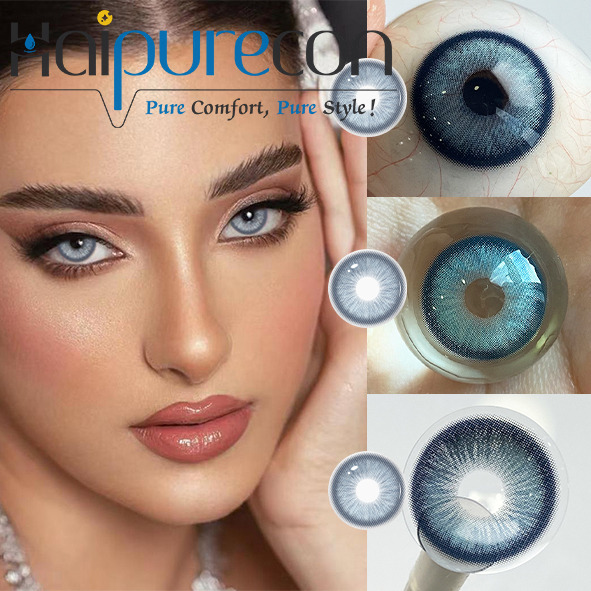
You finally buy a stunning pair of color contacts. They look absolutely flawless on social media. They also shine under flattering indoor ring lights. Step outside into direct sunlight, however, and the illusion shatters. Suddenly, your eyes might look pixelated, harsh, or downright artificial.
Why does this dramatic shift happen? Natural daylight boasts an exceptionally high Color Rendering Index (CRI). This intense, full-spectrum light ruthlessly exposes underlying printing techniques. It reveals strict opacity limits and highlights poor pupil blending. Indoor artificial lighting tends to soften harsh edges. Conversely, the midday sun highlights every single printed dot.
Evaluating these lenses for everyday outdoor wear requires a strategic approach. You must deeply understand how lens opacity interacts directly with your natural eye color. You also need to account for biological pupil dilation. In this guide, we will explore the exact design features you need. Read on to discover how to select lenses correctly and pass the ultimate daylight test.
Key Takeaways
Sunlight exposes pixelation: Direct daylight highlights the dot-matrix printing patterns and hard edges that artificial lighting hides.
Pupil constriction changes the look: Bright natural light causes the pupil to shrink, often revealing your natural eye color through the clear center of the lens (the "halo" effect).
Opacity dictates naturalness: Enhancement tints work best for light eyes, while opaque tints are required for dark eyes, but require superior gradient blending to look realistic outdoors.
Fit equals aesthetics: A poorly fitted lens will slide off-center, instantly breaking the illusion of a natural iris.
The Daylight Test: Why Natural Light Exposes Artificial Lenses
Indoor lighting often flatters our faces. It smooths out textures and softens harsh transitions. Direct sunlight does the exact opposite. Full-spectrum sunlight illuminates microscopic details. It reveals the secrets behind your cosmetic lenses. Many wearers feel frustrated when their favorite indoor lenses look bizarre during a sunny afternoon walk.
To understand this shift, we must look at human biology. The pupil biological response plays a massive role here. Human pupils automatically constrict in bright environments. They shrink to protect the retina from excessive light exposure. Cosmetic lenses feature a clear center zone. This zone allows you to see through the colored pattern. When you step outdoors, your pupil shrinks significantly. It becomes much smaller than this clear center zone. Consequently, your natural iris color suddenly peeks through the gap. This creates a visible ring around your pupil. Industry professionals call this the "halo effect." It instantly betrays the presence of a cosmetic lens.
Sunlight also triggers the dreaded "vampire effect." This phenomenon occurs when lenses use solid color blocks. Cheaply made lenses often lack depth. They rely on single, flat layers of pigment. Under high CRI natural light, these flat colors look jarring. Unblended limbal rings compound the problem. A limbal ring is the dark border around the iris. Natural eyes have soft, fading borders. Artificial lenses often print a harsh, solid black circle. In low-light environments, this thick ring might look dramatic and enlarging. In broad daylight, it looks painted on.
Evaluating Opacity Based on Your Natural Eye Color
Not all lenses work for all eyes. Your natural eye color acts as a base canvas. You must match the lens opacity to this starting canvas. Understanding solution categories helps you avoid costly mistakes. Manufacturers generally divide products into enhancement tints and opaque tints.
For Dark Eyes (Brown/Black)
Dark eyes absorb a lot of light. You cannot simply layer a translucent color over a dark brown iris. The dark pigment will completely overpower the lens. Therefore, dark eyes require fully opaque lenses. These lenses physically block the underlying dark pigment from showing through.
However, opaque does not mean flat. Look closely at evaluation criteria before purchasing. You should seek out multi-tone designs. Three-tone or four-tone opaque lenses perform best. These products use varying layers of pigment. They mix tiny dots of yellow, brown, and the target color (like blue or green). This layering technique successfully mimics natural eye depth. A flat, single-color opaque lens will always look unnatural outdoors.
For Light Eyes (Blue/Green/Hazel)
Light eyes offer much more flexibility. If you have pale irises, you rarely need heavy opaque layers. You are best suited for enhancement tints. These tints use translucent colors. They gently shift your existing shade rather than covering it completely.
High-quality Natural Colored Contact Lenses often utilize these enhancement tints beautifully. They intentionally let your natural iris structure show through the pigment. The light passes through the translucent dye and bounces off your real iris. This optical trick creates stunning realism. Because they rely on your own eye texture, they appear highly realistic even in harsh, direct daylight.
Design Features That Determine a Natural Look
Aesthetics rely heavily on manufacturing precision. When scrutinizing lenses closely, specific evaluation dimensions separate premium products from cheap alternatives. You must examine the printing patterns. You should also evaluate the edges and transitions.
Printing technology dictates the final appearance. Advanced manufacturers use micro-dot matrix printing. This technique prints millions of microscopic colored dots. The human eye blends these dots together from a distance. It closely mimics the cellular structure of a real human iris. Cheap lenses often use solid color bands. These bands look streaky and fake under sunlight.
Edge blending represents another critical feature. Professionals call this feathering. The transition from the colored portion to the clear center must be feathered. It needs a smooth, gradient fade. A sharp, hard circle around the pupil looks robotic. Feathering ensures your natural eye color blends seamlessly into the printed color. This reduces the jarring halo effect when your pupils constrict outdoors.
Finally, you must assess the limbal rings. Natural limbal rings fade softly into the sclera (the white of the eye). Premium lenses feature a subtle, blurred limbal ring. This gentle border adds natural depth and makes the eyes look youthful. Low-quality lenses use a thick, harsh black ring. While popular in certain dramatic cosplay styles, this heavy ring looks completely artificial in daylight.
Comparison Chart: High-Quality vs. Low-Quality Lens Design
Design Feature
High-Quality Lenses (Natural Look)
Low-Quality Lenses (Artificial Look)
Printing Method
Micro-dot matrix mimicking iris fibers
Solid blocks or heavy streaks of color
Pupil Transition
Feathered, soft gradient edge
Sharp, distinct circular cut-out
Color Depth
Multi-tone (3-tone or 4-tone blending)
Single flat color (1-tone)
Limbal Ring
Subtle, blurred, and semi-translucent
Thick, solid, and harsh black
Material Safety and Compliance: The Foundation of a Good Fit
Many buyers obsess over colors and patterns. However, aesthetic evaluation means nothing without absolute safety. Proper sizing dictates both eye health and visual realism. Security and compliance should always be your top priority.
Let us discuss the base curve and diameter. Every human eyeball has a unique curvature. A lens must closely match your eye's specific base curve (usually between 8.4mm and 8.7mm). If a lens does not match, it will move excessively when you blink. Eye doctors call this sliding. In broad daylight, a sliding lens instantly looks fake. The colored pattern shifts away from your natural iris. Worse still, excessive sliding indicates a dangerously poor fit. It can easily scratch your cornea and cause severe infections.
Breathability and comfort also matter deeply. Modern Soft Colored Contact Lenses use advanced hydrogel or silicone hydrogel materials. These materials allow vital oxygen to reach your cornea. Additionally, reputable brands use sandwich technology. The color pigment is literally sandwiched between two clear layers of lens material. The dye never actually touches your eye surface. This prevents severe eye irritation and allergic reactions.
Finally, remember the strict prescription requirement. Many people buy plano lenses. Plano means the lens has zero vision-correcting power. Even so, the FDA classifies all cosmetic lenses as medical devices. You legally require a valid prescription. You must get a proper fitting from a licensed optometrist. Never buy unregulated products from novelty stores or unverified online vendors.
Framework for Shortlisting and Selecting Your Lenses
Choosing the perfect pair requires a logical process. Follow this step-by-step decision matrix to guarantee a successful purchase.
Identify base eye color and determine required opacity: Look at your natural eyes in natural daylight. If they are dark brown, filter your search for opaque lenses only. If they are light blue or green, explore enhancement tints first.
Decide on the desired outcome: Do you want a subtle daily shift or a dramatic change? For a subtle look, choose a color close to your natural shade (e.g., hazel over brown). For dramatic changes, prioritize multi-tone lenses with superior feathering to maintain realism.
Verify the manufacturer's credentials: Never compromise on safety. Check the brand website. Ensure they are FDA approved or CE marked. Look for transparency regarding their manufacturing materials and oxygen permeability rates.
Consult an eye care professional: Visit your optometrist. Get precise base curve and diameter measurements before purchasing Colored Contact Lenses. Ask them for trial pairs. Testing a brand in their office ensures the fit is both safe and visually stable.
Conclusion
Surviving the ultimate "natural light test" requires a highly strategic approach. You cannot rely on heavily edited photos to make your choice. You need a perfect balance of the right opacity, a beautifully feathered design, and an exact anatomical fit. Sunlight will mercilessly expose cheap printing techniques. However, it will also beautifully illuminate high-quality, multi-tone lenses.
Keep a skeptical evaluation mindset when browsing social media. Influencers use ring lights, filters, and low-light environments to make cheap lenses look premium. Always demand to see outdoor, unedited review photos before committing to a brand.
Take action today for your eye health. Book a proper contact lens fitting with your local optometrist. Secure an accurate prescription. Request trial lenses to test how they feel. Prioritize premium materials and advanced printing techniques. You will confidently step out into the sun knowing your eyes look stunningly natural.
FAQ
Q: Why do my colored contacts look fake in the sun but good indoors?
A: Indoor lighting softens details. Sunlight boasts a high Color Rendering Index (CRI). It reveals the printed pixel patterns of the lens. Additionally, bright sunlight causes your pupil to constrict. This exposes your natural iris around the pupil hole. The contrast between your natural eye and the printed design looks jarring outdoors.
Q: Are natural colored contact lenses safe for daily wear?
A: Yes, they are entirely safe if you follow rules. They must be FDA-approved and fitted by a professional optometrist. The wearer must also follow strict hygiene routines. Never sleep in them. Always adhere to the manufacturer's specific daily, weekly, or monthly replacement schedules.
Q: Can people with dark brown eyes get a natural blue look in daylight?
A: Yes, absolutely. However, it requires highly pigmented, multi-tone opaque lenses. Translucent tints will not work. The realism depends entirely on the quality of the center gradient blending. A feathered inner edge will blend the blue smoothly into your natural dark brown center.
Q: Do soft colored contact lenses feel different from regular clear contacts?
A: They are slightly thicker. This is due to the embedded pigment layers sandwiched inside the material. However, modern silicone hydrogel colored lenses offer exceptional breathability. They provide comparable comfort and oxygen permeability to standard clear lenses for daily wear.