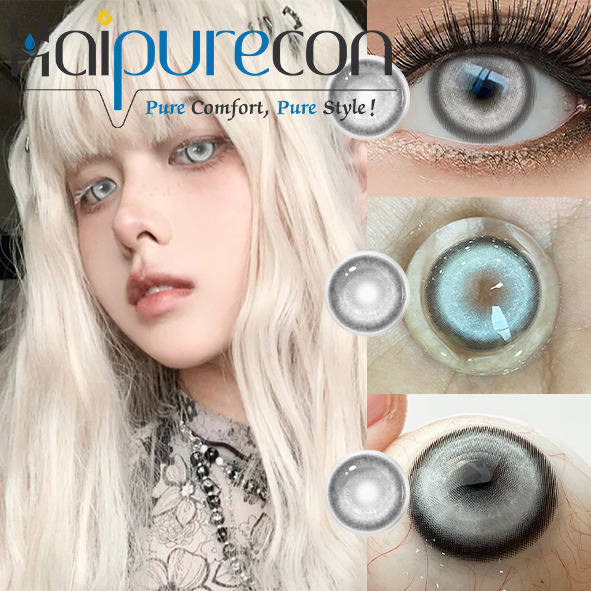
Performers constantly chase striking visual effects under intense theatrical lights. You want your eyes reflecting the vibrant energy of every scene. However, you must maintain sharp spatial awareness and visual acuity on stage. Adding reflective elements fundamentally alters how light enters your eye. Textures like mica, metallic foils, or glitter pigments behave unpredictably. High-intensity stage washes and spotlights exacerbate these optical shifts dramatically.
We created this guide to establish a rigorous, evidence-based evaluation framework. You will learn how to select safe, functional Glitter Contact Lenses. This framework perfectly balances aesthetic impact against functional visibility. Whether planning live performances or complex photo shoots, making informed choices prevents on-stage disasters. Knowing the optical trade-offs ensures you hit your marks safely. You can protect your vision while delivering an unforgettable visual performance.
Key Takeaways
Visibility Trade-offs: Reflective pigments on lenses will inevitably cause minor light scattering (halos or arcs) under direct stage lighting. Central clear pupil diameter is the most critical metric for visibility.
Material Matters: High-quality glitter contact lenses encapsulate reflective particles within a hydrogel sandwich layer to prevent corneal abrasion.
Performance Constraints: Strobe lighting and hard-edge spots (like follow spots) exacerbate glare; wash lighting is generally more forgiving for wearers.
Compliance is Non-Negotiable: Only purchase from FDA-cleared or CE-marked vendors; theatrical environments dry out eyes faster, requiring lenses with verifiable high oxygen permeability (Dk/t).
Evaluating the Physics: How High-Intensity Light Interacts with Textured Lenses
Standard contacts transmit light seamlessly into your retina. They utilize uniform, transparent hydrogel materials. Adding glitter creates an immediate physical barrier. This barrier reflects light outward to create a desired visual effect. Simultaneously, it refracts scattered light inward toward your pupil. This inward refraction creates unwanted optical side effects during live performances.
Different stage lighting setups trigger entirely different optical reactions. Understanding these light sources helps performers anticipate vision challenges.
Directional Spots and Fresnels: These fixtures produce hard, focused beams. They carry a high risk for inducing "light arcs." The intense beam hits the textured edge of the lens. It bounces off the embedded glitter particles directly into the visual axis.
LED Washes: These fixtures flood the stage evenly. They present a much lower glare risk. However, heavy color-mixing can severely alter your perceived eye color. A blue LED wash hitting gold glitter often reads as muddy green to the audience.
Strobes and Flash Photography: These emit maximum burst reflections. Sudden bright flashes cause temporary, rapid pupil constriction. Your pupil shrinks and overlaps the colored, pigmented portion of the lens. This sudden overlap restricts your vision instantly.
Performers frequently experience the "Halo Effect." Actors often report a milky or blurry periphery when working under harsh top-lighting. Audiences might assume this indicates a defective product. In reality, it represents basic optical physics. Intense overhead beams bounce off heavy-pigment particles near the clear pupil zone. The scattered light floods the retina. It washes out contrast and creates a glowing, blurry halo around your field of vision.
Solution Categories: Cosplay Glitter Contacts vs. Standard Theatrical Lenses
Choosing the right eyewear requires matching the product to your specific performance demands. Not all theatrical lenses function identically under harsh illumination. We can categorize these products into three distinct types.
Standard opaque lenses utilize flat, matte pigments. They provide highly predictable color blocking. The matte finish means significantly less glare for the wearer. Unfortunately, they offer less dynamic visual interaction under dramatic stage lighting. They look flat from a distance.
Alternatively, performers often choose Cosplay Glitter Contacts. These utilize tiny micro-particles of reflective material. They deliver incredibly high visual impact for close-up video or macro photography. They catch ambient light beautifully. However, they introduce moderate light-scatter risks for live, fast-paced stage movement. You must balance the sparkle against your need for clear peripheral vision.
Foil or metallic finishes take reflection to the extreme. Silver Glitter Contact Lenses feature high-opacity metallic layers. They offer exceptional, brilliant reflection under direct spotlights. The major trade-off involves a much smaller clear pupil zone. Wearing these requires heavily choreographed, low-risk physical movement on stage. You will experience significant peripheral vision loss.
Performance Lens Category Comparison
Lens Category
Visual Impact
Glare Risk
Ideal Stage Use
Standard Opaque
Low (Flat Color)
Minimal
High-action, fast-paced blocking
Embedded Sparkle
High (Dynamic)
Moderate
Close-up video, medium-paced acting
Metallic / Foil
Extreme (Brilliant)
High
Static modeling, carefully choreographed cues
The Visibility vs. Aesthetic Framework: Key Evaluation Dimensions
Evaluating performance eyewear requires looking beyond simple color choices. You must analyze strict physical dimensions and manufacturing techniques. These factors dictate your safety and comfort during long shows.
Clear Pupil Diameter (CPD) stands as the most critical specification. A larger clear center extending beyond 5mm ensures significantly better vision. Your pupil has room to dilate in dark theater wings without hitting the pigment line. However, a larger CPD provides less color impact overall. Conversely, a smaller center around 3mm looks incredibly realistic to the audience. The tight pigment hugs the pupil closely. Unfortunately, it heavily restricts your vision under dim stage cues.
Pigment encapsulation methods dictate long-term safety. You must evaluate manufacturing techniques carefully. Reputable brands utilize a strict "sandwich" printing technique. They trap the reflective pigment securely between two clear hydrogel layers. Exposed pigment scraping against your cornea causes severe friction. It leads to rapid drying, micro-abrasions, and significant safety risks. Never wear lenses lacking proper encapsulation.
Base curve and overall fit determine optical stability. A poorly fitted lens shifts constantly during blinking. Under intense stage lighting, a shifting lens spells disaster. The reflective edge crosses your visual axis repeatedly. This movement creates highly disorienting light flashes. It breaks your concentration and makes navigating stairs or stage edges dangerous.
Implementation Realities: Mitigating Glare, Dryness, and "Light Arcs"
Purchasing high-quality eyewear only solves half the problem. Executing a safe performance requires strict environmental management. You must adapt your habits to accommodate the physical realities of the stage.
Pre-show acclimation prevents mid-performance panic. Wearers must test their lenses under actual stage lighting. Do this during technical rehearsals, never just in brightly lit dressing room mirrors. The dressing room lacks the harsh contrasts of the main stage. You need time to let your brain adjust to the minor light scattering.
Theatrical stages present notoriously harsh environments. They run incredibly dry. Haze machines, airborne dust, and intense heat from lighting rigs strip moisture from the air. You must implement a strict hydration protocol.
Schedule rewetting drops: Apply approved, preservative-free drops before stepping on stage. Apply them again during every costume change.
Monitor lens warping: Dry lenses warp slightly. This warping lifts the lens edge away from the cornea. It worsens light refraction and exacerbates edge glare significantly.
Limit wear time: Remove specialty theatrical lenses immediately after curtain call. Do not wear them to the cast party.
Performers often require troubleshooting for light arcs. Sometimes, wet, blurry arcs of light appear suddenly. Vision care forums document this issue frequently. It typically indicates lens decentration or severe tear-film disruption. The lens slides slightly out of place. Light hits the tear fluid pooling at the lens edge. If hydrating drops fail to resolve it, an optometrist consultation becomes necessary. You likely need a different base curve parameter to stabilize the fit.
Shortlisting Logic: How to Buy Safely and Effectively
Navigating the theatrical makeup market requires extreme caution. Countless vendors sell substandard products. You need a reliable framework for vetting suppliers. Follow this precise shortlisting logic to protect your eyes.
Step 1: Verify Medical Device Compliance rigorously. Look specifically for FDA 510(k) clearance or a valid local equivalent like a CE mark. Disqualify any brand selling "one-size-fits-all" products instantly. Legitimate vendors always utilize a prescription verification process. They refuse to ship without confirming your optical parameters.
Step 2: Match the specific lens type to your exact performance needs. Do not buy blindly based on aesthetics alone. Analyze your blocking and choreography.
For high-action stage combat or fast-paced dance routines: Prioritize larger clear pupil zones. Choose products featuring lower glitter density. You need maximum peripheral vision to track your scene partners safely.
For static modeling or slow cosplay showcases: High-density opaque options work perfectly. You can safely utilize striking metallic styles here. The reduced mobility makes the visual trade-off acceptable.
Step 3: Secure an optometrist sign-off. Ensure your specific base curve (BC) and diameter (DIA) match your current prescription exactly. Many performers misunderstand non-corrective eyewear. "Plano" lenses lack magnifying power. However, they still require professional fitting. Every human eye possesses a unique curvature. Wearing incorrect parameters guarantees decentration, severe glare, and potential corneal damage.
Conclusion
Glittering lenses offer unparalleled visual drama for theatrical productions and cosplay events. They capture light beautifully, elevating your character design instantly. However, they come with undeniable optical trade-offs. You cannot ignore the physics of light scattering and reduced pupil clearance.
Prioritize safety and functional visibility above pure aesthetic impact. Source properly encapsulated, FDA-cleared products exclusively. Test your chosen eyewear strictly under actual tech-rehearsal conditions. Accept that heavy theatrical lighting requires deliberate behavioral adaptations on stage. Managing your ocular hydration and understanding your visual limits ensures a flawless, safe performance.
FAQ
Q: Are glitter contact lenses safe for long performances?
A: Only if they are FDA-cleared and properly fitted. Wear time should typically be limited to 4-6 hours due to lower oxygen permeability compared to standard clear lenses, especially in dry, heated stage environments.
Q: Will silver glitter contact lenses block my vision completely?
A: No, but they will restrict peripheral vision and may cause a "tunnel vision" effect or halos when a bright spotlight hits the eye directly.
Q: Do I need a prescription for cosplay glitter contacts if I have perfect vision?
A: Yes. In the US and many other jurisdictions, all contact lenses are classified as medical devices. A "plano" prescription is legally required to ensure the base curve and diameter fit your specific eye shape safely.
Q: How can I stop the lenses from blurring when looking into a spotlight?
A: You cannot eliminate physics. However, ensuring the lens fits perfectly (so it doesn't slide) and keeping the eyes lubricated with compatible drops will minimize severe light refraction and blurry arcs.