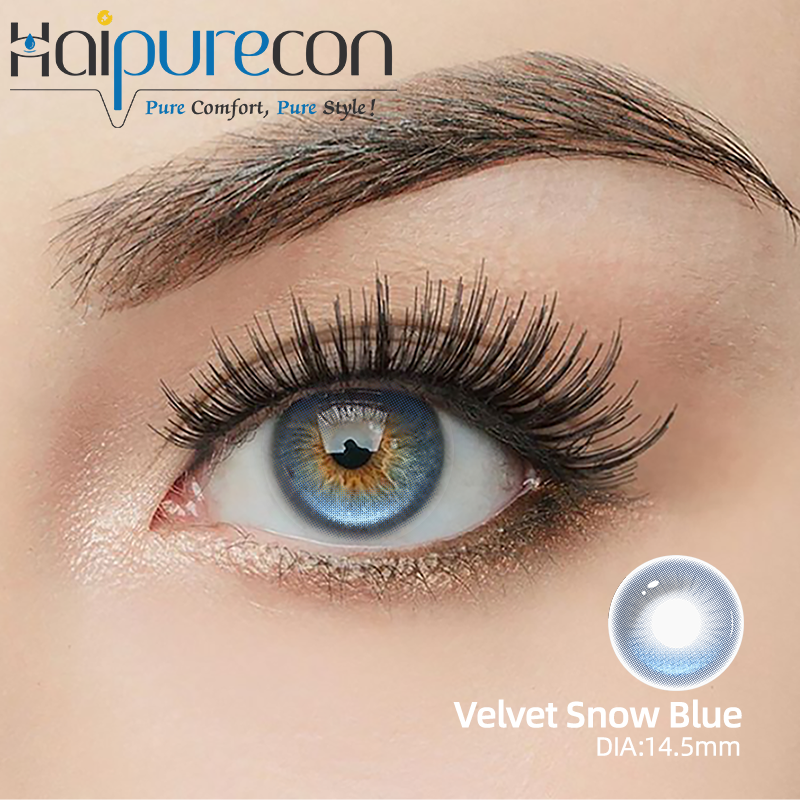
Transitioning to colored lenses requires more than just inserting the lens; it demands a strategic recalibration of your makeup palette to prevent a disjointed or artificial appearance. Misaligning eyeshadow undertones with blue lenses can cause the eyes to appear washed out, or conversely, make the lenses look overly intense and unnatural. This diminishes the aesthetic value of the lens investment. The human eye naturally detects discrepancies in color harmony. When the tones surrounding the eye clash with the lens pigment, the resulting look draws attention to the artificial nature of the contact rather than enhancing your natural features.
By applying foundational color theory, evaluating lens opacity, adjusting for skin undertones, and defining your target aesthetic, users can systematically select makeup tones that maximize the impact and realism of their lenses. Proper cosmetic pairing anchors the lens color to your face. It bridges the gap between the manufactured pigment of the contact and your natural complexion, creating a cohesive, striking, and believable enhancement.
Key Takeaways
Complementary Contrast: Warm earth tones (copper, bronze, terracotta) sit opposite blue on the color wheel, providing the highest structural contrast to make blue lenses visually pop.
Opacity Balancing: High-opacity blue contacts for dark eyes require grounded, neutral makeup to balance the dense pigment of the lens print and maintain a realistic appearance.
The Realism Alternative: When deep blue shades feel too intense for everyday wear, transitioning to grey lenses or pairing blue lenses with muted taupe and grey makeup can bridge the gap between vibrant color and natural realism.
Everyday Realism: Daily blue contact lenses pair best with soft, matte taupes and warm browns to support a subtle, natural aesthetic for daytime wear.
Application Safety: Mitigating implementation risks requires strict adherence to application sequencing (lenses before makeup) and avoiding loose, high-fallout pigments that can cause micro-abrasions.
The Mechanics of Color Theory for Blue Lenses
Identifying why certain colors clash with blue lenses while others create a seamless enhancement comes down to basic color mechanics. The color wheel provides a reliable framework for cosmetic selection. Colors situated directly opposite each other on the wheel create maximum contrast. For blue, that direct complement is orange. While bright orange eyeshadow might not suit everyday wear, translating this complementary color into wearable cosmetic tones yields exceptional results.
Rust, copper, peach, honey, and warm terracotta all stem from an orange base. Applying these warm tones around the eye pushes the cool blue pigment of the lens forward. This optical illusion increases the perceived brightness and vibrancy of the eye. The warmth of the eyeshadow absorbs ambient light differently than the cool surface of the lens, creating a dynamic visual separation that highlights the iris pattern. When you blend a copper transition shade into the crease, the underlying red and yellow pigments in the makeup force the blue in the lens to stand out sharply against the skin.
Conversely, pairing blue eyeshadow with Blue Contact Lenses introduces significant analogous and monochromatic risks. Matching your lid color exactly to your lens creates competing focal points. The eye struggles to determine where the makeup ends and the iris begins, often resulting in a flat, dated appearance that washes out the lens color entirely. The lack of contrast flattens the dimension of the eye, making the printed pattern on the hydrogel lens look highly artificial.
You can still successfully execute cool-toned looks without compromising the lens. Utilizing charcoal, silver, or icy taupe creates a bold, editorial contrast. These shades share a cool undertone with the lens but differ drastically in value (lightness or darkness). A deep charcoal smokey eye provides a dark frame that makes light blue lenses appear piercing and luminous, avoiding the washed-out effect of a direct color match.
Color Family
Specific Shades
Visual Effect on Blue Lenses
Best Use Case
Warm Earth Tones
Copper, Rust, Terracotta
Maximum contrast, pushes blue forward, increases vibrancy.
Everyday enhancement, making dull lenses pop.
Cool Neutrals
Charcoal, Slate, Icy Taupe
Frames the eye, creates a piercing, luminous effect.
Evening wear, editorial looks, smokey eyes.
Analogous Tones
Navy, Baby Blue, Teal
Competes with lens pigment, flattens dimension.
Generally avoid, or use only as a subtle waterline accent.
Soft Warm Neutrals
Honey, Peach, Warm Beige
Subtle enhancement, mimics natural shadows.
Daytime office wear, soft romantic aesthetics.
Evaluating Lens Opacity and Shade Intensity
The specific manufacturing process and pigment density of the lens dictate the required makeup intensity. Not all blue lenses behave the same way under lighting or against cosmetics. Sheer, tint-based lenses require different styling than fully opaque, printed lenses. Understanding the structural density of your specific contact lens allows you to calibrate your eyeshadow and eyeliner application accordingly.
Extremely light or icy blue lenses present a unique challenge. They can easily look washed out or overly harsh against heavy black eyeliner or dense smokey eyes. The stark contrast between a pale lens and heavy black pigment often highlights the artificial edge of the contact. To anchor light lenses without overpowering them, opt for softer brown eyeliners. Warm, mid-tone eyeshadows provide enough definition to shape the eye while allowing the light blue shade to remain the focal point. Blending a soft hazel or light bronze along the lower lash line provides a grounded boundary that keeps the icy blue from looking alien or overly stark.
Darker blues, such as deep sapphire and navy tones, carry their own styling requirements. These shades can look heavy or overly intense for everyday realism, sometimes appearing almost black in low lighting. Utilize brightening techniques to open up the eye. Champagne inner-corner highlights and lighter, reflective lid shades draw light toward the center of the face, illuminating the darker lens pigment and adding necessary dimension. Avoid heavy matte black shadows on the lid, as they will absorb light and make the navy lens disappear into the background.
Evaluating structural density is critical when optimizing Blue Contacts for Dark Eyes. Lenses designed to cover dark brown irises often feature opaque, multi-tonal prints to block out the natural eye color. Because the lens itself carries a complex, dense pattern, your makeup pairing should remain relatively grounded. Use matte earth tones to balance the visual weight of the lens. Avoid overly frosted or highly metallic shadows across the entire lid. Excessive shimmer combined with a high-opacity lens print creates too much visual texture, highlighting the artificiality of the setup.
If blue lenses consistently appear too stark against your natural complexion, the realism debate often points toward grey lenses. Grey provides a more natural, muted alternative while still achieving a light-eyed look. Both blue and grey lenses benefit from similar warm-toned makeup pairings. Browns, bronze, and taupe maximize natural enhancement for both shades, making the transition between the two colors seamless for your existing makeup routine.
Assess the base opacity of the lens against your natural iris in natural daylight.
If the lens features a dense, opaque print, select matte eyeshadows to reduce competing textures.
If the lens is sheer and blends with your natural eye color, incorporate subtle shimmers to enhance the natural dimension.
Match eyeliner intensity to the limbal ring of the contact lens; use brown for soft rings and charcoal for defined rings.
Scalability: Adapting Tones for Wear-Time, Occasion, and Aesthetic
Scalability in your makeup application allows you to adapt your cosmetic tones based on wear-time, lighting conditions, and specific aesthetic goals. A look designed for flash photography will not translate well to harsh office fluorescent lighting. Adjusting your technique ensures the lenses look appropriate regardless of the environment.
Achieving everyday realism with Daily Blue Contact Lenses requires a soft and romantic approach. The success criteria for daytime wear is a look that passes as natural in daylight. The recommended palette includes soft honey, warm beige, hazel, and muted taupe. These shades mimic natural shadows on the eyelid. Instead of using heavy liquid liner, utilize tightlining techniques with a brown gel pencil. Pressing the pigment directly into the upper lash line maintains a soft, approachable vibe while still defining the eye shape around the blue lens. Keep the lower lash line relatively bare, or use a soft sweep of bronzer to tie the look together without adding heaviness.
High-impact and trending applications demand a bold and editorial approach. The success criteria here shift to high visibility for photography, evening events, or viral makeup trends like siren eyes. The recommended palette deepens significantly. Deep bronze, charcoal gray, icy cool tones, and warm-toned smokey eyes provide the necessary drama. In low-light environments, the blue pigment of the lens needs aggressive contrast to remain visible.
Editorial techniques often involve manipulating the perceived size and shape of the eye. Utilizing contrasting waterline colors, such as a nude or peach pencil, expands the eye area and prevents dark eyeshadows from closing off the lens. Sharp, graphic eyeliner frames the cool tones of the lens, providing a structural boundary that makes the blue pigment stand out sharply against the skin. When executing a siren eye, pull the dark brown or black liner outward and slightly upward, leaving the center of the lid bright to reflect light directly onto the blue contact lens.
Skin Undertones: The Overall Value Influencing Factor
A makeup tone that complements the blue lens must also harmonize with the wearer's natural skin undertone. This conceptual trade-off dictates the final aesthetic value of the look. Ignoring your skin undertone can result in makeup that makes the lens pop but leaves your complexion looking sallow, ashy, or irritated.
Warm complexions feature yellow, peachy, or golden undertones. The best cosmetic pairings for these skin types include golden browns, olive greens, honey, and rich bronzes. These shades enhance the natural warmth of the skin while providing a stark, complementary contrast to the cool blue lens. The olive green, in particular, contains enough yellow to flatter the skin while offering a unique, earthy contrast to the blue iris. When applying bronzer, sweep it slightly into the crease of the eye to create a seamless transition between the face makeup and the eye makeup, anchoring the blue lens into the overall warm complexion.
Cool complexions feature pink, red, or bluish undertones. Applying overly warm, orange-heavy shadows on cool skin can sometimes look bruised or irritated. The best pairings for cool skin tones include rose gold, cool taupe, slate grey, and plum. These shades maintain harmony with the skin's natural redness while subtly enhancing the blue lens. Plum, which contains both cool blue and warm red pigments, acts as a perfect bridge color. It contrasts the lens without clashing harshly against a cool complexion. Silver and icy pink highlights on the inner corner will flatter the cool skin while reflecting beautifully against the blue hydrogel material.
Check the veins on your wrist; green veins indicate warm undertones, while blue/purple indicate cool undertones.
For warm undertones, prioritize gold-flecked shimmers and terracotta mattes.
For cool undertones, prioritize silver-flecked shimmers and plum or taupe mattes.
Neutral undertones can flex between both palettes, utilizing bronze and slate grey interchangeably.
Implementation Risks and Lens Safety Mitigation
Applying cosmetics around contact lenses introduces specific physical risks. Makeup fallout, bacterial transfer, and lipid buildup on the lens surface can compromise both your vision and eye health. Mitigating these risks requires strict adherence to application protocols and careful product selection. A beautiful makeup application is useless if the lens becomes clouded or the eye becomes inflamed.
The sequencing protocol is non-negotiable. Always insert your contact lenses before applying any makeup. This prevents you from trapping cosmetic dust, oils, or mascara flakes under the lens during insertion. Trapped debris causes immediate discomfort and can lead to corneal micro-abrasions. When you insert the lens first, the lens acts as a shield for the cornea. Conversely, always remove your lenses before using makeup removers. Cleansing balms, micellar waters, and oil-based removers can cause chemical degradation of the lens material or leave a permanent cloudy film on the surface.
Product selection constraints play a major role in lens safety. Avoid loose glitters and highly powdery eyeshadows with significant fallout. These particles easily migrate into the tear film and adhere to the lens. Mica, a common ingredient in shimmery eyeshadows, is essentially crushed rock and can severely scratch the lens surface. Fibrous mascaras designed for extreme lengthening often shed tiny fibers throughout the day, which can become lodged beneath the contact. Oil-heavy eye primers can melt from body heat and seep into the eye, disrupting the water gradient of the lens and clouding your vision.
Opt for pressed powders that have a creamy, binding texture. Cream eyeshadows that set completely dry are excellent choices, as they eliminate the risk of powder fallout entirely. Tubing mascaras, which wrap each lash in a water-resistant polymer tube rather than painting them with oil-based pigment, are the safest option for lens wearers. They do not flake or smudge into the eye during wear and remove easily with warm water, preventing the need for harsh rubbing around the delicate eye area.
Conclusion
Warm earth tones, specifically copper, bronze, honey, and rust, remain the most scientifically and aesthetically reliable choices for enhancing blue lenses. This reliability stems directly from complementary color theory, which guarantees maximum visual contrast. Balancing the intensity of these tones against the specific opacity of your lenses ensures a cohesive and striking appearance.
When shortlisting your daily makeup routine, prioritize matte warm-neutrals for natural daytime looks. If you are covering naturally dark eyes, select high-opacity lenses and balance their complex prints with grounded, non-competing earth tones. Should vibrant blue feel too intense for your daily environment, grey lenses serve as a highly natural alternative that responds beautifully to the exact same warm-toned makeup principles.
Audit your current eyeshadow palettes to identify your most reliable warm-toned neutrals and transition shades.
Inspect your cosmetic formulas to ensure they are lens-safe, discarding loose glitters or flaking mascaras.
Select a lens opacity that aligns precisely with your baseline eye color and your desired aesthetic vibe.
Establish a strict hygiene routine, always inserting lenses before makeup application and removing them before cleansing.
FAQ
Q: Do I put my blue contact lenses in before or after makeup?
A: Always insert your contact lenses before applying makeup. This prevents cosmetic oils, powders, and mascara flakes on your hands or lashes from becoming trapped underneath the lens. Trapped debris causes irritation and can scratch the cornea. Always remove your lenses before using makeup remover.
Q: Can I wear blue eyeshadow with blue contact lenses?
A: While possible, matching blue eyeshadow directly to blue lenses often creates a flat, monochromatic look that washes out the eye color. If you prefer cool tones, opt for slate grey, charcoal, or icy taupe to provide structural contrast without competing directly with the lens pigment.
Q: What eyeliner color looks best with blue contacts for dark eyes?
A: Warm brown, bronze, and copper eyeliners look best. Because high-opacity lenses for dark eyes feature dense prints, heavy black eyeliner can make the eye look harsh and artificial. Brown liner provides necessary definition while maintaining a softer, more realistic boundary around the lens.
Q: Grey vs. Blue contact lenses: Which looks more natural for everyday wear?
A: Grey lenses generally look more natural for everyday wear, especially on individuals with darker natural coloring. Grey provides a muted, realistic light-eyed effect that blends easily with most skin tones, whereas bright blue can sometimes appear stark or overly vibrant in standard daylight.
Q: How do I prevent my daily blue contact lenses from looking washed out?
A: Avoid using eyeshadows that perfectly match the lens color. Instead, use complementary warm tones like peach, terracotta, or warm taupe in the crease. This color contrast pushes the blue pigment forward visually, making the lenses appear brighter and more defined against your skin.
Q: Are cream or powder eyeshadows better for contact lens wearers?
A: Cream eyeshadows that set completely dry are generally better for contact lens wearers. They eliminate the risk of powder fallout migrating into the eye and adhering to the lens surface. If using powder, tap off excess pigment from the brush before applying to minimize debris.