Contact lens material changes how comfortable your lenses feel. The material decides how much oxygen gets to your eyes. It also affects how well the lens keeps moisture and how it fits. Studies show silicone hydrogel lenses give up to eight times more oxygen than old soft lenses. This helps your eyes feel good all day. You can see that new materials have made lenses more comfortable and popular over time:
Year | Number of Wearers (millions) | Key Material Change |
1970 | 2 | PMMA |
1986 | 25 | Introduction of soft lenses |
2023 | 100 | Silicone hydrogels |
You should think about what you need. Talk to your eye care professional to find the best comfort for you.
Key Takeaways
Pick silicone hydrogel lenses for more oxygen and comfort. They help your eyes feel good all day.
Think about daily disposable lenses to stop buildup and dryness. You get a new lens each day, which helps if your eyes are sensitive.
Always talk to your eye doctor to find the best lens fit. The right fit can stop discomfort and keep your eyes healthy.
Drink enough water and use a humidifier to lower dryness. These easy steps can make wearing lenses more comfortable.
Clean your lenses often the way your doctor says. Keeping them clean helps stop irritation and keeps your eyes healthy.
Contact Lens Material Types
There are different kinds of contact lens materials. Each one has special features. These features change how the lens feels and fits. They also affect how healthy your eyes stay. Newer materials have made lenses feel better and work better for your eyes.
Hydrogel and Silicone Hydrogel
Hydrogel lenses use water to keep eyes wet. They soak up water, so your eyes stay moist. Silicone hydrogel lenses are a newer choice. They let more oxygen reach your eyes. This helps stop dryness and irritation. You can see how they are different in the table below:
Lens Type | Oxygen Permeability | Moisture Retention |
Rigid Gas Permeable | High oxygen permeability | Moderate moisture retention |
Hydrogel | Low oxygen permeability | High moisture retention due to water absorption |
Silicone Hydrogel | Very high oxygen permeability (up to 5x more than hydrogel) | Good moisture retention, comfortable for extended wear |
Many people think silicone hydrogel lenses feel good all day. Some studies say there is no big comfort difference between hydrogel and silicone hydrogel. But silicone hydrogel lenses give your eyes more oxygen. Daily disposable lenses often use these materials to keep your eyes healthy.
Rigid Gas Permeable (RGP)
RGP lenses help you see clearly and fix astigmatism. These lenses let lots of oxygen get to your eyes. This keeps your eyes healthy. You might need time to get used to them. They feel harder than soft lenses. RGP lenses last a long time and do not tear easily. Some people think they are not comfy at first. But they are strong and easy to clean.
Tip: If you want sharp vision and do not mind getting used to new lenses, RGP lenses could be a good choice.
Hybrid and Specialty Lenses
Hybrid lenses have a hard center and a soft edge. This makes them clear and comfy. Specialty lenses, like scleral lenses, go over your cornea and rest on the white part of your eye. These lenses help people with special eye shapes or problems like keratoconus. Specialty lenses can fit better and feel better for people who cannot wear regular lenses.
Hybrid lenses give you clear sight and comfort.
Scleral lenses help keep eyes moist and steady.
Specialty lenses help with special needs, like high astigmatism or after eye surgery.
You can pick a lens material that feels good and fits your life.
Key Material Properties for Comfort
When you pick a contact lens, comfort is important. Three things matter most for comfort. These are oxygen flow, moisture, and how the lens fits. These things change how your eyes feel every day. They also help keep your eyes healthy and free from pain.
Oxygen Permeability
Your eyes need oxygen to stay healthy. Contact lenses must let oxygen reach your cornea. If not enough oxygen gets through, your eyes can swell or hurt. You might see redness or have blurry vision. Silicone hydrogel lenses let more oxygen pass than old materials. This helps your eyes feel fresh and lowers the chance of discomfort.
Here is a table that shows how oxygen levels affect your eyes:
Oxygen Permeability (Dk/t) | Effect on Corneal Health |
At least 87 barrers | Avoids overnight edema |
125 barrers | Prevents corneal swelling |
Up to 8 times higher | Improved comfort and health |
You feel better when your eyes get enough oxygen. Silicone hydrogels let lots of oxygen through. They keep your eyes healthy and help stop swelling. These lenses also fit well, like soft lenses do. More oxygen means less risk of pain or eye damage.
New lens materials have made a big difference. New lenses use special coatings and moisture systems. These changes help stop discomfort. Many people stop wearing contacts because of discomfort.
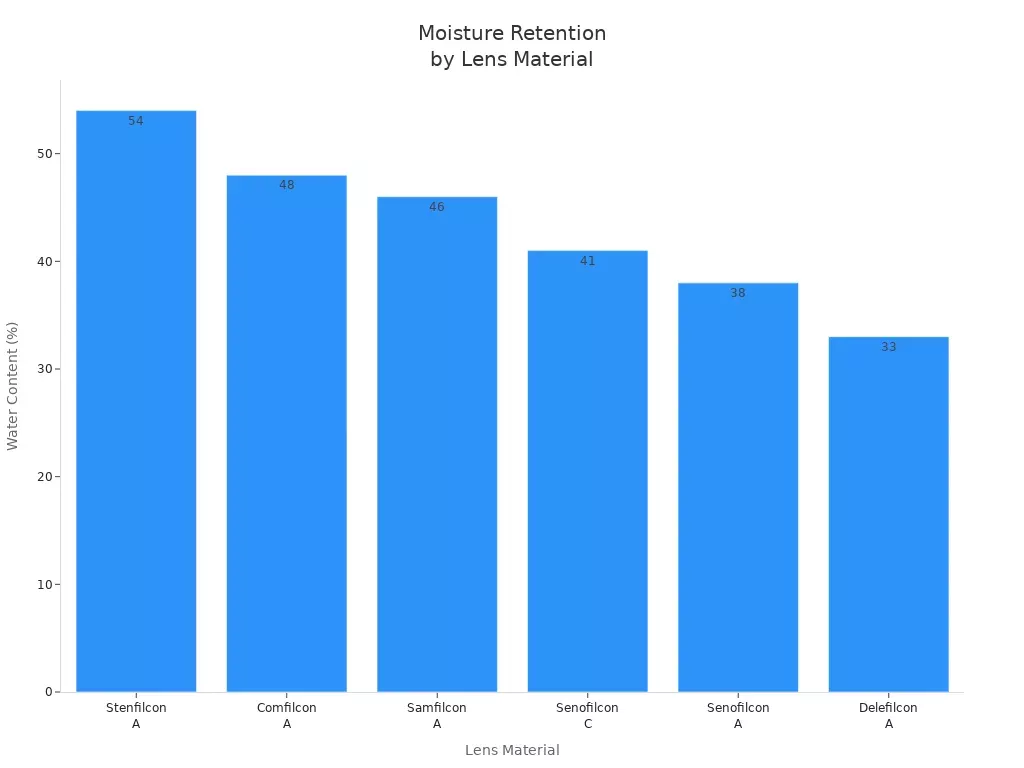
Moisture Retention
Moisture is important for your eyes. If your lens dries out, your eyes may feel dry or sore. Good moisture keeps the lens smooth and wet. This lowers friction and helps your eyes feel good all day. Some lenses soak up water from your tears. This can make your eyes feel dry. New lens technology helps keep moisture in the lens.
Here is a table that compares water content in different lenses:
You want a lens that stays wet. High water content helps keep your eyes moist. This is important for daily disposable lenses. These lenses are made to feel good all day. Moisture also helps stop pain and dryness. You can see clearly and feel good when your lens stays wet.
Moisture keeps the lens smooth and wet.
It lowers friction and stops irritation.
New lens materials help your eyes feel good longer.
Flexibility and Fit
How a lens fits your eye is important for comfort. Soft lenses use bendy materials. These lenses shape to your cornea. This gives a steady fit and clear sight. Soft lenses also cover the cornea and part of the white of your eye. This helps the lens stay in place and feel good.
Soft lenses are bendy and fit many eye shapes.
They let oxygen through, which is good for your eyes.
Their shape gives you a wide view.
Rigid gas permeable lenses use hard plastic. These lenses do not bend much, but they give sharp vision. RGP lenses work well for people with astigmatism or special vision needs. They also let lots of oxygen reach your eyes. Some people need time to get used to RGP lenses. But they last a long time and are easy to clean.
RGP lenses are strong and let in lots of oxygen.
They help with tricky vision needs and odd eye shapes.
They keep their shape on your eye, which helps you see better.
How flexible your lens is can change how steady it stays on your eye. For example, if you swim or climb, your lens might move or dry out. This can make your eyes hurt or the lens fall out. You need a lens that fits well and stays comfy, even when you are active.
Tip: Always talk to your eye doctor if your eyes hurt or your lens feels different. The right lens material can help you feel better and keep your eyes healthy.
Common Contact Lens Comfort Issues
You might feel uncomfortable when you wear contact lenses. Many people have dryness, irritation, allergies, or problems with deposits. These problems can make your eyes hurt or feel bad. It is important to know why these things happen and how to fix them.
Dryness and Irritation
Dryness is the main reason people feel discomfort. You may feel like something is in your eye. Your eyes might feel scratchy or gritty. This happens when the lens does not stay wet and smooth. If your lens dries out, it rubs more against your eyelid. This can make your eyes red or sore.
Dryness is the top reason for discomfort in people who wear contact lenses. Many people also feel scratchiness, grittiness, or like something is in their eye. These problems often happen when the lens is not slippery or wet enough. When the lens is dry, it rubs more against your eyelid. This extra rubbing can explain why your eyes feel bad.
You can feel better by using daily disposable lenses. These lenses stay wet and do not need cleaning solutions. Lenses made from silicone hydrogel or with wetting agents help keep your eyes moist. If your eyes still feel dry, talk to your eye doctor.
Drink water to help your eyes make tears.
Use a humidifier to add water to the air.
Try the 20-20-20 rule to rest your eyes.
Allergies and Sensitivities
Allergies can make your eyes itchy or puffy. About 15 to 20 out of 100 people have allergies. Eye problems happen in 40 to 60 out of 100 people with allergies. Springtime can make these problems worse.
New lens materials can help stop allergies. Silicone hydrogel lenses with special coatings keep away deposits and hold moisture. Daily disposable lenses give you a clean lens every day and stop buildup.
Feature | Traditional Hydrogel | Modern Silicone Hydrogel (with Surface Treatment) |
Oxygen Flow (Dk/t) | Lower | Up to 5-7x Higher |
Allergy Impact | Can make symptoms worse | Greatly lowers irritation |
Deposit Resistance | Gets more protein deposits | Very good resistance |
End-of-Day Comfort | Drops as lens dries | Stays moist |
Best For | Short wear times | Sensitive eyes, allergy season |
If allergies keep making your eyes hurt, you may need a new lens or a new way to clean them.
Deposits and Hygiene
Deposits can build up on your lens and make your eyes hurt. Lipids and proteins from your tears stick to the lens. Silicone hydrogel lenses let in more oxygen but can get more lipids. HEMA-based lenses get fewer lipids. Lenses with lots of water and ions get more proteins.
Taking care of your lenses is very important for your eyes.
Always follow your eye doctor’s and lens cleaner’s instructions.
Cleaning your lenses removes dirt and germs.
If you do not rub and rinse your lenses, sticky layers called biofilms can form. Biofilms are hard to clean and can cause infections. Never use tap water with your lenses because it can cause bad infections. Always use fresh cleaning solution. Hydrogen peroxide systems can clean your lenses even better.
Tip: If your eyes keep hurting, are red, or feel sore, take out your lens and see your eye doctor. Good cleaning and the right lens material help your eyes feel good and your lenses fit well.
Comfort Issue | Description |
Lens Awareness | You can feel the lens in your eye, which is not comfortable. |
Dryness | Many people feel dry eyes, which can hurt. |
Soreness | Some people feel pain when wearing lenses. |
You can stop discomfort by picking the right lens, keeping your eyes healthy, and cleaning your lenses the right way.
Choosing the Right Lens Material
Lifestyle and Comfort Needs
You should think about your daily routine when picking a contact lens. If you play sports or move a lot, soft lenses often work best. These lenses stay in place and feel gentle on your eyes. If you spend many hours looking at screens, you may blink less. This can make your eyes dry. Lenses that hold more water and keep hydration help stop discomfort. Daily disposable lenses are a good choice if you want fresh lenses every day. They do not collect dust or pollen, which helps if you have allergies.
Environmental Factor | Impact on Comfort |
Dry environments | Can cause dryness and discomfort. Choose lenses for dry eyes. |
Screen time | Less blinking dries eyes. Moisture-rich lenses help. |
Seasonal allergies | Can cause irritation. Daily disposables reduce buildup. |
You should also think about how often you want to change your lenses. Some people like to replace them every day. Others prefer lenses that last longer. Your comfort depends on your activities, how long you wear your lenses, and your personal needs.
Eye Health Considerations
Your eyes need enough oxygen and water to stay healthy. The right lens material helps with both. If you have dry eyes, allergies, or other eye problems, you may need special lenses.
If you have astigmatism, presbyopia, dry eyes, or other conditions, you may need specialty lenses designed for your specific vision or comfort needs.
You should tell your eye doctor about any discomfort or changes in your eyes. They may check your tear film and eyelids to make sure your lens fit is right. Good lens fit and proper hydration lower the risk of discomfort and keep your eyes healthy.
Professional Guidance
You should always get a proper fitting from an eye care professional. They will check your eyes, measure your lens fit, and look at the water content and oxygen flow of each lens.
Your doctor will help you pick the best lens for your comfort, eye health, and daily needs. This support helps you enjoy clear vision and healthy eyes for a long time.
Choosing the right contact lens material helps your eyes stay healthy and feel good every day. You need enough oxygen, moisture, and a proper fit to keep your eyes comfortable. Studies show that silicone hydrogel lenses lower the risk of swelling and other problems. You can see better and enjoy daily life when your eyes feel their best. Talk to your eye care provider to find the best option for you.
High oxygen flow keeps your eyes safe.
Good moisture stops dryness.
A proper fit prevents discomfort.
FAQ
What is the most comfortable contact lens material?
You may find silicone hydrogel lenses most comfortable. These lenses let more oxygen reach your eyes and help keep them moist. Many people choose them for daily wear.
How can you reduce dryness when wearing contact lenses?
You can use lenses with high water content or daily disposables. Drink water often. Try using a humidifier at home. Ask your eye doctor about special drops for dry eyes.
Can allergies affect contact lens comfort?
Yes, allergies can make your eyes itchy or red. You should use daily disposable lenses to avoid buildup. Clean your lenses well. Talk to your doctor if you have allergy symptoms.
How do you clean contact lenses to avoid discomfort?
You must wash your hands before touching lenses. Use the cleaning solution your doctor recommends. Rub and rinse your lenses every day. Never use tap water. Good hygiene helps you feel comfortable.
What tips help with maximizing contact lens comfort?
You should follow your doctor’s advice. Choose the right lens material for your needs. Replace lenses on schedule. Keep your eyes moist. Clean your lenses properly. These steps help you enjoy comfortable vision.